The archive is often established postfacto, an incomplete account compiled from whatever remains. Not Virgil's. Virgil archived in the present tense, preserving his work obsessively and intentionally from his parents' house in Rockford, IL to his office at Louis Vuitton headquarters on rue du Pont Neuf. Everything was kept, from sketchbooks01, to physical prototypes, to vast collections of fashion and printed matter, to reams of digital correspondence, to the boarding passes that piled up as his work in fashion and as a DJ came to demand constant travel. As V's career took off, his output increased alongside his capacity to both acquire and store objects of significance02. The Virgil Abloh Archive™ exists today as both a kaleidoscopic representation of Virgil's practice and a vehicle for the continued exploration of his ideas. The archive was exhibited for the first time last October in Paris03, and the Air Jordan 1 OG High x V.A.A. is its first authorized edition. The Air Jordan 1 was selected because of what it reveals about Virgil's tendencies as a designer and the sociocultural forces that shaped him, a kid raised in the Chicago suburbs, mesmerized by a man in flight.
Today the AJ1 is a serialized product, existing in seemingly infinite color combinations. When Virgil began working with Nike in October 2016, the AJ1's ubiquity was a puzzle he had to solve. How do you, as V put it, stop the scroll and interrupt a deluge of social imagery? The work began at Nike HQ in Beaverton with a boxcutter and a question: Is there actually air inside an AJ104? Virgil got to work finding out, slicing up sneakers with his faithful X-Acto knife to reveal their inner workings. This turned out to be a useful technique for crystallizing his fascination with the process, how products are made and later imbued with meaning.
V's hypothesis was that 30 years after its introduction, an in-progress AJ1 is more interesting than a finished AJ1. We all knew that silhouette like the backs of our hands, but had we ever seen one dissected? He sliced off the swoosh and re-attached it so it floats just off the upper, lit up at two points with electric blue stitching and what looks like orange gaff tape. Its name and birthplace were stamped on tilt on the medial upper. Its leather panelling was swapped for exposed foam. It was important to V to meaningfully alter the form of the sneaker. To change its bones means rethinking the way it is produced. Mass production implies importance at scale: Enough people believe in this idea to sink capital into coordinating its manufacture. There are opportunity costs to making this instead of that. Changing colors is low stakes, but changing the fundamental shape and structure of a shoe? Complex, expensive, remarkable in the context of Nike in 2016 and proof of the belief they had in V. His AJ1 was a finished product made to look like a sample. Tactical wabi-sabi, reduced to perfection. It was designed in one work session.
“V's hypothesis was that 30 years after its introduction, an in-progress AJ1 is more interesting than a finished AJ1.”
The AJ1 was the first model in a collection called THE TEN05 that articulated the codes V had honed through his work with his own labels, Pyrex Vision and Off-White™. His emphasis on process and revealing how the object was made, his recuperation of industrial language and symbols, his sense of irony06. Released in October 2017 via a pair of two-day workshops in New York and London called “OFF-CAMPUS”07, the sneakers were a genuine phenomenon, a testament to the potential of pairing a fresh perspective with Nike's platform. The seismic success of THE TEN and his AJ1 in particular expanded Virgil's audience exponentially. His motifs—like his “QUOTATION MARKS”—became pop cultural tropes, his wildly prolific partnership with Nike accelerated, and he would soon after collaborate with the likes of Mercedes-Benz, Braun, and Vitra and become artistic director of Louis Vuitton's menswear08.
It is no exaggeration to say working with Nike was V's dream job. As a kid he'd draw sneakers and mail them off to Nike, saving the boilerplate rejections he'd get back on corporate letterhead. Once inside HQ, it was only right that he'd immediately freak the AJ1, the most important sneaker ever made. It is a genuine icon of American design, up there with the Ford Model-T and the Eames lounger, and freighted with symbolism both personal to V and universal to his generation and cultural milieu. You needn't know a thing about sneakers to recognize the AJ1—it's been part of the global visual firmament since it launched in 1985.
INTUITION(AND)BELIEF
GSXG12BXcAE4aTH.jpg
Screenshot 2026-03-18 at 21-37-00.jpg
Documentation.jpg
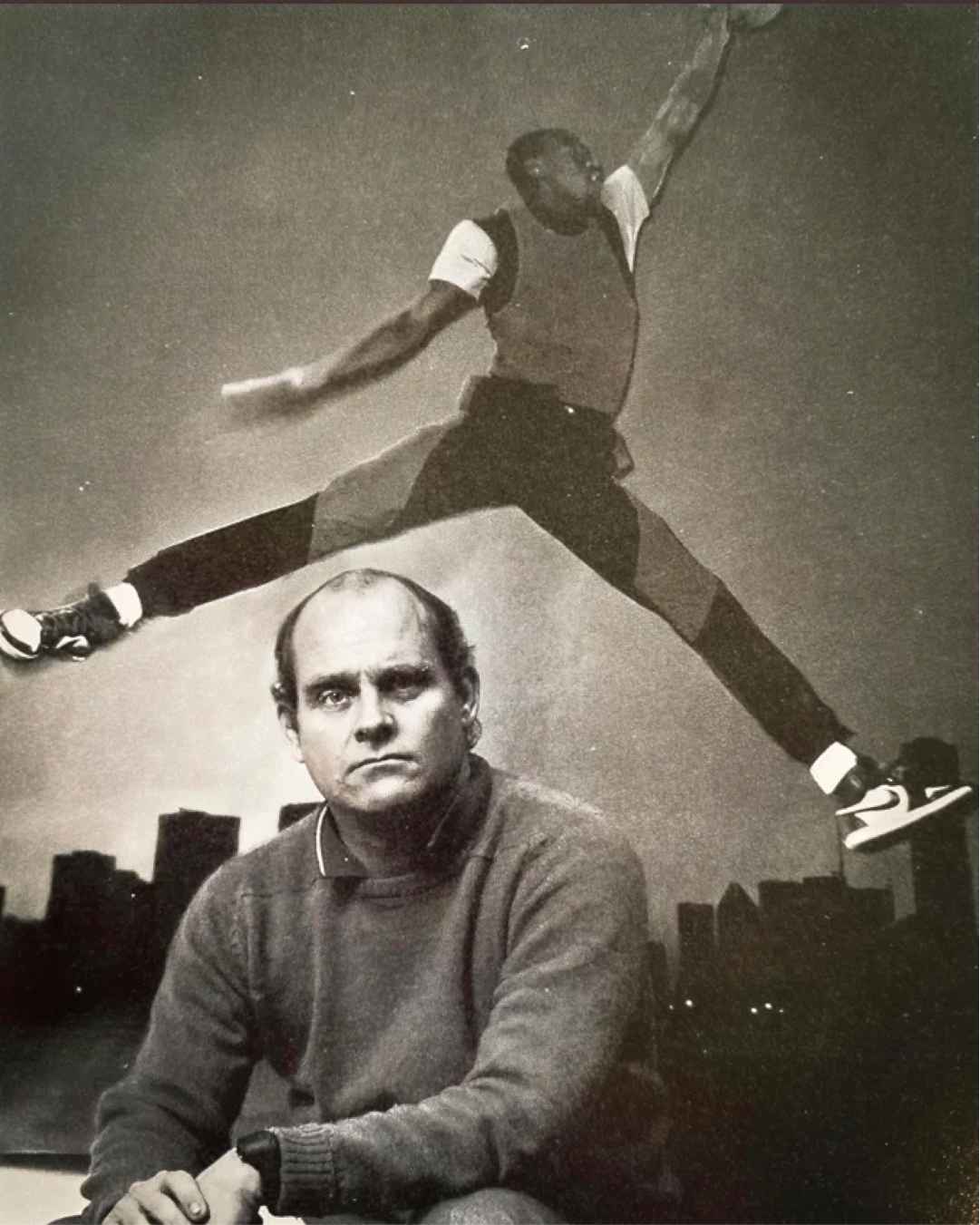
The AJ1 was designed by Peter Moore09, who joined Nike as its first creative director in 1983 when it bought his studio. Moore, a graphic designer by trade, had been working with Nike since the late 1970s on all facets of its visuals, giving the brand cinematic depth10 and its athletes tailored treatments, ranging from stately and nuanced to playful and goofy11. Moore and his team were responsible for some of the era's best corporate image-making, as sumptuous and enduring as Eiko Ishioka's12 work for Parco in Japan and ad agency Chiat/Day's for Apple13. Moore's creative direction drew athletes to Nike and would prove instrumental in Air Jordan mythmaking.
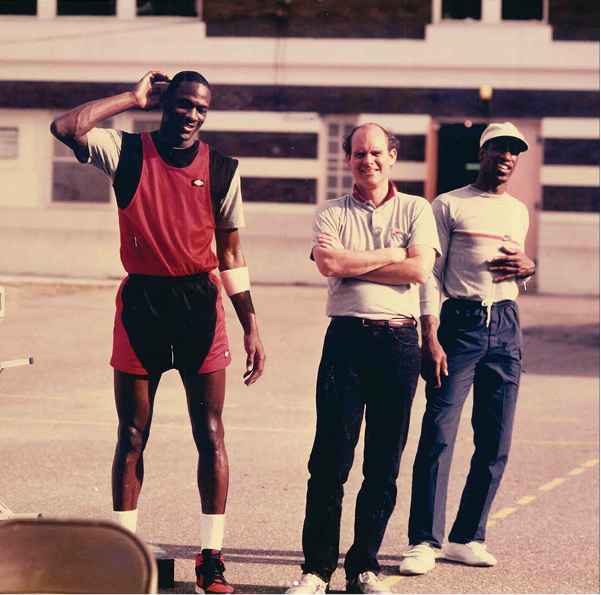
In the book Peter Moore: Sneaker Legend14, Moore referred to Michael Jordan as “innately graceful”—his first impression upon meeting Jordan. The significance of this meeting, which also included Nike VP Rob Strasser15 and CEO Phil Knight16, is tough to overstate. Nike needed a hit and their hoops guru Sonny Vaccaro17 believed in Jordan, who was convinced to sign with a unique offer package: royalties on sales and a proper line of his own, with a logo, apparel, dedicated marketing, and more. Table stakes today, but in 1984, unprecedented.
The sneaker came together quickly, assembled in a matter of months—an intense timeline Virgil no doubt appreciated. Moore wanted the AJ1 to be the shoe that would bring color to basketball sneakers, which at the time were mandated by the NBA's uniform policy to be at least 51 percent white18. It's hard to see that OG “Bred” colorway as provocative today, but even Jordan didn't like it at first, describing the colors as both clownish and devilish next to his preferred UNC blues19.
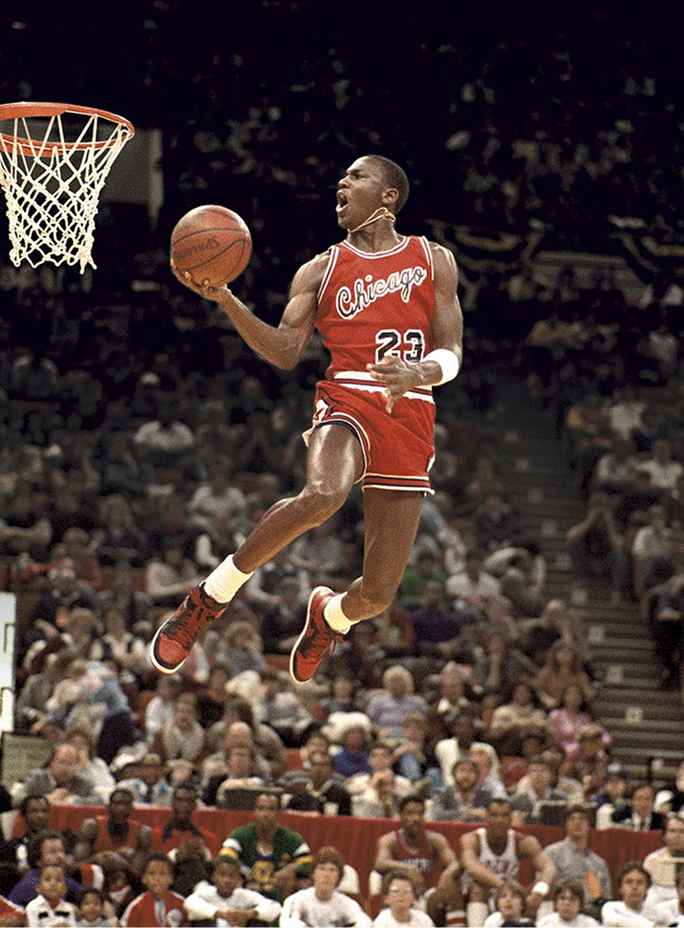
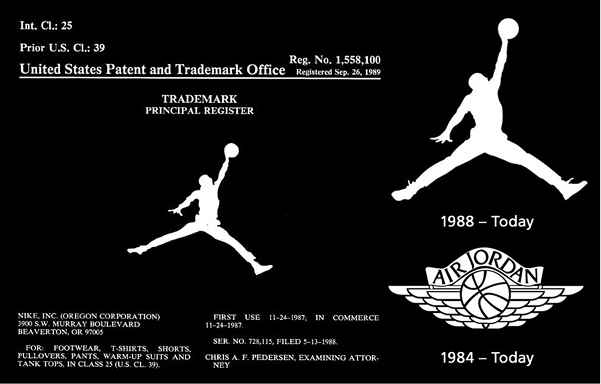
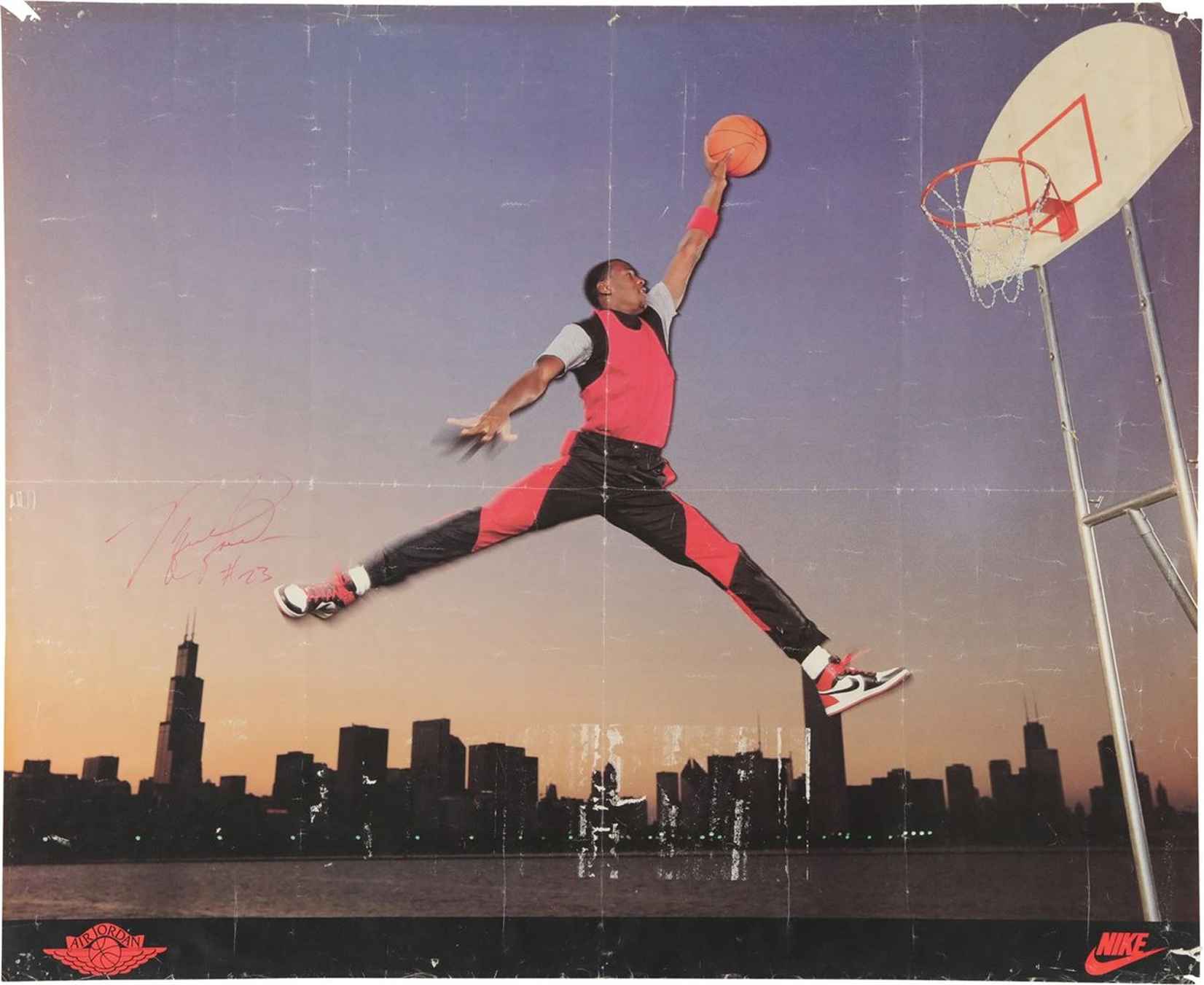
The AJ1 wasn't ready for the start of Jordan's rookie preseason, so on October 18, 1984 he laced up a pair of custom Air Ships color-swapped to match the samples Moore had presented to Jordan as part of Nike's pitch. You know this story: NBA commissioner David Stern20 issued a scolding, threatening to fine the Bulls $5,000 for every game in which Jordan violated the dress code, Nike leaned into the attention with an ad written and shot in little more than 24 hours21, and some combination of this forbidden allure, the design's inherent appeal, and Jordan's indelible swag made it the hottest shoe on the planet. Around the same time, Moore had MJ photographed dunking against the Chicago skyline, and this pose became the basis for the Jumpman. Perfect storm.
item_112834_1_320022.jpg
0038_MoreJordan_sharpened.jpg
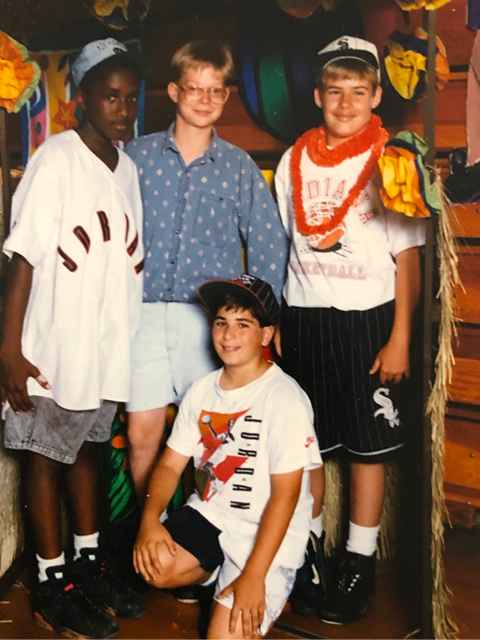
You look at photos of MJ from that rookie season and you want to cry. No one has ever worn sneakers better. No one has ever even worn socks better. Maybe it's down to the film stock of the era, maybe it's nostalgia for a moment of equilibrium when images travelled far and fast but still had a chance to resonate. Imagine being a Chicago kid in the 1980s, getting to grow up with MJ as your guy. Your parents let you stay up late to watch him drop 33 on the Blazers to clinch his second title, you watch the highlights on Sportcenter three times the next morning, you see the same photo of him on the cover of every issue of the Tribune22 at every newsstand you pass on your way to school—not the same events refracted from dozens of shaky fan-captured angles but one perfect image to clip out and Scotch tape inside your locker. This was the era that shaped V's sensibilities. These sneakers were his portal to design, the objects that introduced him to the idea that the things we interact with are products of decisions made by people and that he, too, could be one of those decision-makers. That's what V would call an unlock. Watching a new Air Jordan and an accompanying marketing campaign roll out year after year, he began to understand how a design language evolved iteratively, how one got from point a, to point g, to point x, how imagery didn't just add to product but multiplied it. V spoke often of the energy he felt growing up23 in Michael Jordan's Chicago. It gave him the feeling that his dreams could be made real, which turned out to be true, though of course we'll never know whether they would've if he hadn't first believed.
image001-2.jpg
“Maybe it's down to the film stock of the era, maybe it's nostalgia for a moment of equilibrium when images travelled far and fast but still had a chance to resonate.”
natas-wall-slam-1.jpg
animalChin_002-final.jpg
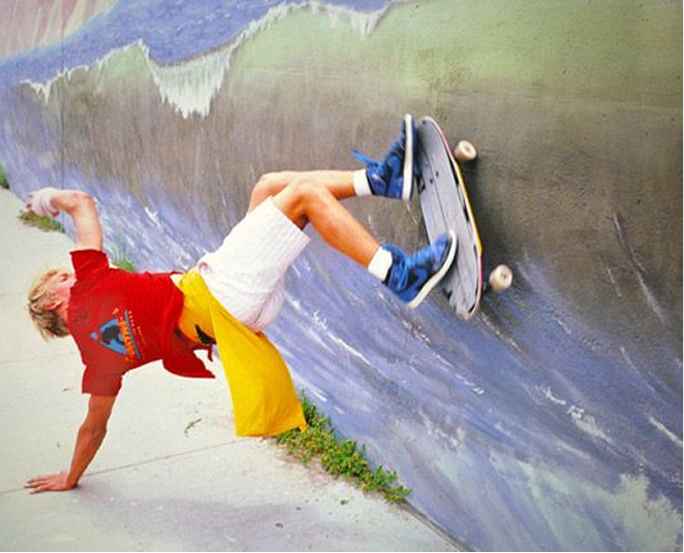
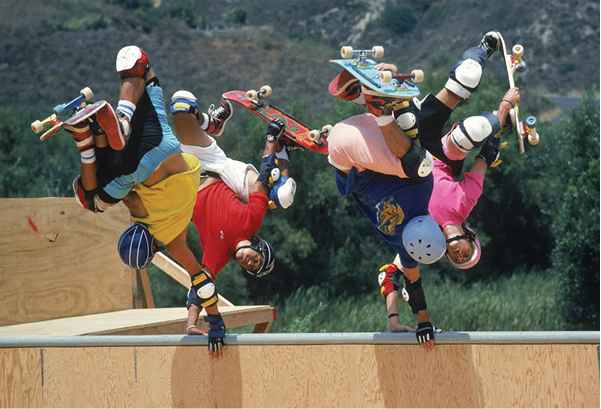
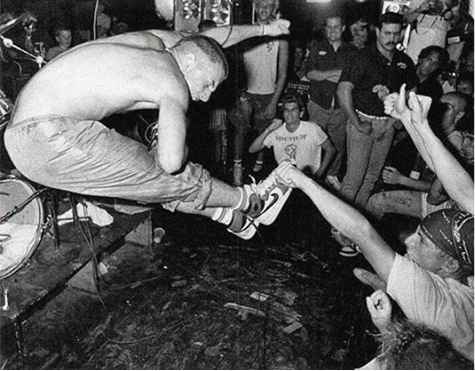
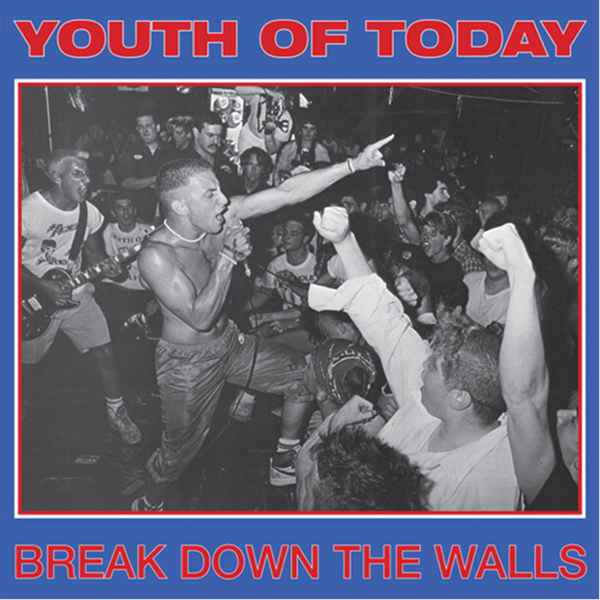
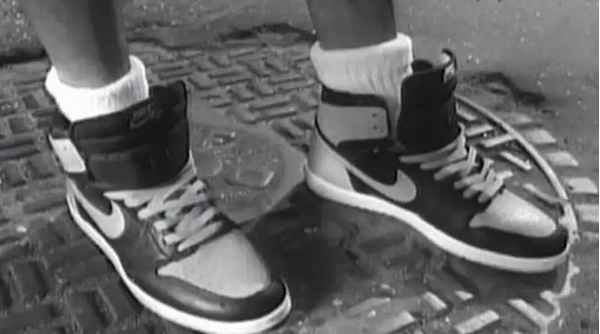
40 years on, the AJ1 remains an exceptional synthesis of the sturdy, streamlined language of the basketball sneakers that came before and the teched-out, innovation-obsessed designs that would follow. They were a tipping point. In terms of civilian wearability, basketball sneaker design peaked with the first Air Jordan. They very quickly became much more than basketball shoes, permeating culture beyond any demographic boundaries, and Virgil loved that semiotic slippage, not this or that but this and that, and that, and that. Spike Lee wore AJ1s in his debut feature She's Gotta Have It24, the expression of a Black Brooklynite inspired equally by his beloved Knicks and Akira Kurosawa. They were worn by rockers like Slash25 of Guns 'n' Roses and Megadeth's Dave Mustaine26. Widely available once the Air Jordan 2 dropped, AJ1s were adopted by skaters, from household names like Powell-Peralta's Bones Brigade27 to progressive forces like Natas Kaupas28, who was busy at the time inventing contemporary street skating. V loved things that expressed hybridity by way of relatability—he could build off that shared language, tilt it slightly off-axis, loop it back on itself. The only other 20th-century fashion objects in the same category of familiarity29 as the AJ1 are Levi's 501s and Chuck Taylors.
youthOfToday_05.jpg
a3965595487_16.jpg
54579-1532336916.jpg
Though the AJ1 released as part of THE TEN used the classic “Chicago” colors, V's original experiments30 were on the “White/White” colorway, better known as the “Alaska.” Stripped of those Bulls colors, the AJ1 becomes prototypical, an ur-Jordan that shifts the focus from the man himself to the sneaker's form and structure. It also emphasizes one of V's favorite materials: time. As any sneakerhead knows, you can't really protect a pair of Jordans. Put them behind glass and the foam still yellows, the rubber still crumbles, the glue still dries and cracks. The decay can be slowed but never stopped, so why not embrace it? Virgil always said he cared more about ideas than products, that the latter were really just vessels for the former. The object's meaning will outlast the object itself, so V's approach was to overcode the object, to load it with aspirations and anxieties and inside jokes for himself, his friends, and their communities.
The Air Jordan 1 OG High x V.A.A.31 is an almost-exact reproduction of Virgil's “Alaska,” released in 2018, all white except for its icy, barely-blue foam. The only update is to the stamped model name. It is captured here by Andrew Zuckerman, commissioned by Virgil Abloh Archive™. Zuckerman is known for “hyper-clarity”— startlingly pure, the highest-fi representations of objects at their most elemental. These photographs are one half of a series of diptychs that will only be complete when he shoots the same pair 10 years from now, unworn but nevertheless chewed up by chemistry32.
The last interview Virgil gave was for the fall 2021 issue of SNEEZE33, a large-format magazine released shortly before his passing. The cover, shot by Kenneth Capello, features a portrait of V next to a Benz with a “PYREX” vanity plate, the Chicago skyline towering in the background, just like it did in the photograph that birthed the Jumpman logo. It's a photograph two lifetimes in the making. There was a bit of Jordan in everything V did.